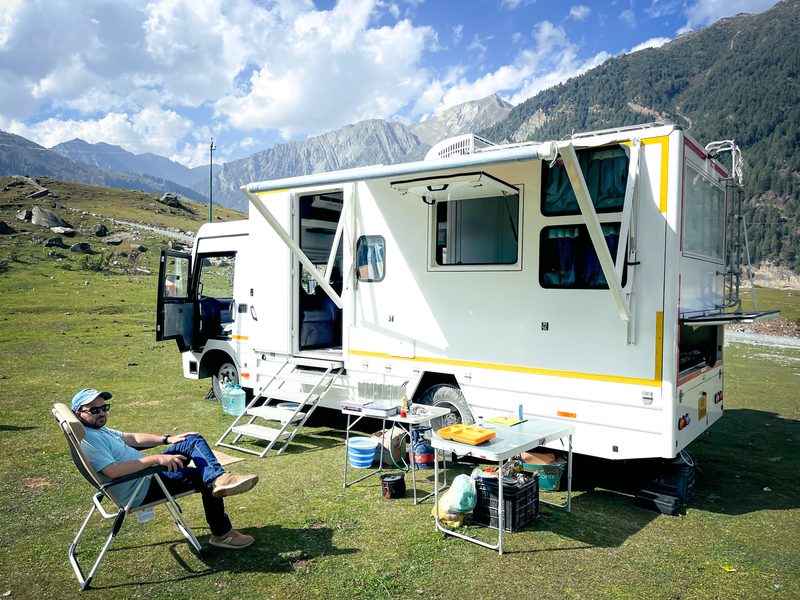
Most caravan content tells you what you’ll see. This one tells you what you won’t — because the whole point of a good crew is that the machinery of the trip stays invisible.
I run My Rolling Homes. I’ve been on every route we offer, sometimes as the operator coordinating from Delhi, sometimes riding along to train a new crew member or test a route variation. This is a real account of what happens behind the scenes on a 5-day Delhi-Jaipur-Pushkar trip — the operational diary the guests never see.
If you’re considering a caravan trip in India — whether you call it an RV holiday, a motorhome rental, or a campervan adventure — this is what your money actually buys.
The Day Before: Prep You Don’t See
The trip starts 24 hours before the guests arrive.
Vehicle check (3 hours). The driver goes through a 40-point checklist. Tyre pressure on all six wheels. Brake fluid. Coolant levels. Generator oil. Solar panel connections. Every light, every lock, every hinge. The water tank gets a full flush and refill — 500 litres of fresh water through the RO purifier. The grey water and black water tanks are emptied and sanitised.
Kitchen stock. The helper goes to the wholesale market. Rice, dal, atta, oil, spices, onions, potatoes, tomatoes, milk, bread, eggs, butter, tea, coffee, sugar, biscuits. Fresh vegetables and fruit get bought on the road (better quality, and we know which market stalls to trust on each route). If the guests have sent dietary preferences — and most do — the list adjusts. A Jain family means no onion, no garlic, different spice profile entirely.
Bedding and linen. Fresh sheets, pillow covers, towels, bathroom supplies. Everything washed, ironed, and set. The interior gets a full wipe-down — every surface, every shelf, every handle.
Route briefing. I go through the itinerary with the driver and helper. Parking spots for each night (primary and backup). Water refill points. Fuel stops. The weather forecast (wind direction matters for awning setup; rain changes the camping spot calculation). Known road works or diversions.
By the time the guests walk up to The Explorer the next morning, it looks like a hotel room on wheels that materialised overnight. That’s the idea.
Day 1: The Pickup (What the Crew Is Thinking)
5:00 AM — Driver’s alarm. Final exterior check. Engine warm-up (the Ashok Leyland diesel needs 5-10 minutes in winter). AC pre-cool the cabin — guests should walk into a comfortable vehicle, not a hot box.
6:30 AM — Pickup. The helper loads luggage into the under-floor storage while the driver briefs the guests on safety (seatbelts, bathroom lock, kitchen during motion, emergency stops). This briefing takes 3 minutes. Some guests listen carefully; others are too excited. Both are fine — the crew adapts.
The first chai. Within 15 minutes of departure, the helper has the kettle on. This is deliberate. The first cup of tea, made on a moving kitchen while the city scrolls past the window, is when most guests realise this isn’t a bus with beds. It’s a home that moves. That shift in perception is what the entire experience rests on.
What the driver is doing while you drink chai: Watching mirrors. Managing the six-wheel turning radius through Delhi traffic. Planning the fuel stop. Checking the route for the third time. The driver’s job in the first hour is to make the vehicle feel small — to make guests forget they’re in something the size of a bus. By the time we hit the highway, most families are walking around the cabin like it’s their living room. That’s when I know the trip has started properly.
Day 2: The Invisible Logistics
A typical morning at a camping spot — let’s say we’re parked near Pushkar Lake.
5:30 AM — Helper wakes up. Checks the water level (we’re at 320 litres — plenty). Starts the generator if solar reserves are low (they usually aren’t — 1000W of panels charge the batteries by mid-morning). Begins breakfast prep: parathas, chai, eggs to order.
What the guests see: Breakfast appears. What they don’t see: the helper bought fresh paneer from a village 3 km back at 5 AM because the one from Delhi was a day old and he wasn’t happy with it.
6:30 AM — Driver’s morning routine. Walk-around inspection. Tyres (desert heat expands them — pressure matters). Engine oil level. Coolant. A check on the levelling — the caravan needs to be level for the fridge compressor and the toilet flush to work properly. If we’re even slightly off, he adjusts the wheel chocks.
The water question. On a 5-day trip, water management is the crew’s most constant calculation. 500 litres sounds like a lot, but showers (15L each), cooking (20L/day), drinking water through the RO (10L/day), toilet flushes (3L each), and handwashing add up. The helper tracks usage mentally. The driver knows every refill point on every route — a municipal tap here, a temple tank there, a petrol station with a water outlet. Guests never think about water. That’s the point.
The bathroom nobody talks about. Here’s what makes The Explorer different from 95% of Indian caravan rentals: the toilet works. Not a portable chemical toilet you empty into a ditch. A real flush toilet connected to a real black water tank with real plumbing. The helper services this tank — it’s not glamorous, but it’s the single feature that separates a caravan holiday from a camping ordeal. Every competitor we’ve researched either doesn’t have a toilet, has a non-functional display toilet, or has a portable unit that nobody wants to use after Day 1. We built the entire vehicle around the bathroom. When guests say “I could actually live in this,” the bathroom is why.
Day 3: When Things Don’t Go to Plan
On the Delhi-Pushkar route, Day 3 is usually Pushkar to Jaipur — an easy 150 km. But trips aren’t scripts, and the crew’s real skill shows when the plan changes.
Scenario: the family wants to stay an extra night at Pushkar. This happens often. Pushkar is beautiful, the lake is peaceful, and the bazaar pulls people back for a second look. The crew’s response: the driver recalculates the remaining km against the pooled allowance (we have 2,100 km for 5 days; Pushkar-Jaipur-Delhi is only 420 km, so we’re fine). The helper adjusts the meal plan — one more day means one more market run. I get a WhatsApp update and confirm the revised schedule. The guests experience this as “Sure, no problem.” The crew experiences it as four recalculations in ten minutes.
Scenario: a mechanical issue. In over a hundred trips, we’ve had exactly two that required roadside intervention. One was a tyre puncture (40 minutes to change on a six-wheel vehicle — the spare is mounted underneath). The other was a coolant hose that loosened at altitude (the driver tightened it with tools from the onboard kit). Neither stranded anyone. Neither ruined a day. The 6-wheeled Ashok Leyland chassis is the most service-network-dense platform in India — there isn’t a town in Rajasthan without a mechanic who knows these engines.
Scenario: weather. A dust storm near Pushkar, which happens in pre-monsoon months. The crew’s response: retract the awning (it takes 90 seconds), close all windows and vents, switch to recirculated AC. The caravan becomes a sealed, air-conditioned pod while the storm passes. Guests watch the dust from behind glass with chai in hand. In a tent camp, this is an evacuation. In The Explorer, it’s a weather event you watch from your sofa.
Day 4: The Night Everyone Remembers
For the Pushkar route, Day 4 usually means a camp spot in the Aravalli foothills between Pushkar and Jaipur. A quiet place — a farm, a cleared area with a view, a spot the driver found years ago and keeps coming back to.
What the crew does at camp setup:
-
Parking and levelling (10 minutes). The driver finds the flattest ground, reverses into position (easier to leave in the morning), and levels the vehicle with wheel chocks and the built-in stabilisers.
-
Awning and outdoor setup (15 minutes). The awning extends, the helper brings out the folding table, chairs, and the portable campfire pit. If it’s a spot where ground fires are allowed, he gathers wood. If not, he uses the gas-powered pit.
-
Power check. Solar batteries are usually full by afternoon. The helper runs the generator for 30 minutes to top up if needed — this powers the AC for the evening and charges all devices overnight.
-
Dinner prep (1 hour). The helper cooks dinner from scratch. On the Pushkar route, this is usually something Rajasthani — dal baati churma if the guests haven’t tried it, or a simpler dal-rice-sabzi if they want comfort food. The kitchen is small but functional: two-burner gas stove, prep counter, sink, storage for spices and utensils. The fridge has been keeping ingredients cold since Delhi.
What the guests experience: They walk out of the caravan into a set-up camp with chairs, a fire, and food cooking. The sky is clear, the stars are coming out, and someone hands them chai. They didn’t pack anything, set up anything, cook anything, or plan anything. They just showed up.
That gap — between the guests’ effortless experience and the crew’s careful choreography — is what ₹19,900 per day actually buys.
Day 5: The Drive Home (and What the Crew Does After)
Early morning departure. The helper packs the outdoor setup while the driver warms the engine. Breakfast is cooked on the move — the helper makes parathas and chai as we clear the countryside and hit the Jaipur-Delhi highway.
The drive itself is 5-6 hours. Guests read, nap, watch the landscape, or plan their next trip (this happens more often than you’d think — by Day 5, most families are already discussing “where next?”). The helper prepares lunch on board for the last time.
Delhi drop-off by early afternoon. Luggage unloaded, goodbyes said, and the guests go home.
What happens next (the part you never see): The driver takes The Explorer to our maintenance bay. Full wash — exterior and interior. Tank service — fresh water, grey water, black water, all flushed and sanitised. Kitchen deep-clean. Linen stripped and sent for laundry. The 40-point vehicle check starts again for the next trip.
The turnaround between trips is 24 hours minimum. We don’t back-to-back without a full reset. The next guest walks into the same fresh, fully stocked caravan the previous guest did. That consistency is non-negotiable.
What This Means for You
If you’re comparing caravan options in India, here’s what to ask yourself:
Does the operator tell you who drives? If the driver is a random hire from a fleet, they don’t know the routes, the parking spots, or the vehicle’s quirks. Our driver trained on The Explorer specifically.
Does the crew cook? A “helper” who makes chai is not a cook. Our helper handles every meal — three a day plus chai and snacks — from fresh ingredients bought on the route. This isn’t a premium add-on. It’s included.
Is the bathroom real? Walk on board and flush the toilet. If it doesn’t flush into a holding tank with proper plumbing, it’s not a bathroom — it’s a prop.
What’s the post-trip turnaround? If the operator runs trips back-to-back without a 24-hour reset, you’re getting yesterday’s sheets and half-empty tanks.
These aren’t luxury questions. They’re baseline operational standards that separate a real motorhome experience from a decorated van with a mattress.
Frequently Asked Questions
Who drives The Explorer?
A professional driver who has been trained specifically on this vehicle and these routes. He handles all driving, navigation, parking, and vehicle maintenance. You never touch the steering wheel.
What does the helper actually do?
Everything you don’t want to think about. All cooking (breakfast, lunch, dinner, chai, snacks), buying fresh ingredients at local markets, managing water and waste tanks, setting up outdoor camp equipment, daily interior cleaning, and assisting with anything guests need.
Do the crew sleep in the caravan too?
No. The driver and helper arrange their own accommodation — a nearby dhaba room, the vehicle cab, or a local guesthouse. The caravan interior is entirely yours, all night. Their accommodation is included in the daily rate; you’ll never see a crew line-item on your bill.
What happens if something breaks during the trip?
The driver carries a full toolkit and spare parts for common issues. The Explorer is built on a 6-wheeled Ashok Leyland chassis — the most service-network-dense platform in India. We have never had a breakdown that stranded guests.
Can the crew handle dietary restrictions?
Yes. Tell us your preferences when you book — vegetarian, Jain, vegan, gluten-free, allergies, kosher. The helper plans menus and buys ingredients accordingly. International guests often request specific cuisines and the crew adapts. We’ve cooked everything from Jain thalis to gluten-free pasta on this kitchen.
Curious about the operational details of a specific route? Ask us on WhatsApp — we’re happy to talk logistics, not just itineraries.
Related reading:
Why The Explorer Is Different
India's only caravan with a fully working toilet & hot shower, 1000W solar panels for off-grid power, RO water purifier, twin ACs, 120L fridge with freezer, and a rooftop deck. Professional driver + helper included at ₹19,900/day.
Founder, My Rolling Homes · @TheLazyNomads
Aman has driven caravans across India since 2020 — from the deserts of Rajasthan to Ladakh's highest passes. He built The Explorer from scratch, obsessing over every detail so travelers could experience India's wildest roads without compromising on comfort.
Ready to Plan Your Trip?
Tell us your dates, route, and group size — we'll put together a personalized itinerary.
Chat on WhatsApp